

How to Choose the Right Tuff Tray Combination
Posted by EYR Team on 23rd Nov 2026
read moreChoosing a tuff tray is about more than simply picking a tray. With different sizes and shapes available, as well as stands, mats, inserts, accessories and ready-made bundles, it can be difficult to know where to start.
Whether you're choosing a tuff tray for a childminding setting, nursery, school or home, this guide will help you work out which tray, stand and accessories you need to create a setup that works for you.
You don't need to buy everything at once, either. Start with the essentials and build your tuff tray provision over time.
Quick Guide: Which Tuff Tray Is Right for You?
If you're not sure where to start, use this table as a quick guide before exploring the options in more detail.
| Tuff tray type | Suitable for | Suggested age* | Indoor/Outdoor | Space required |
|---|---|---|---|---|
| Mini | Childminders & home use | 2–5 | Both | Small |
| Standard | Nurseries & schools | 2–7 | Both | Medium |
| Deep Round | Sensory & messy play | 2–7 | Both | Medium |
| Hexacle | Collaborative play | 3–8 | Both | Large |
*Age ranges are a general guide. Always check the individual product information and consider the children using the resource, the activity and your setting's requirements.
EYR's current tuff tray range includes standard, mini, round and Hexacle options, as well as individual trays and complete tray-and-stand or start-up options.
Explore the full Tuff Tray range →
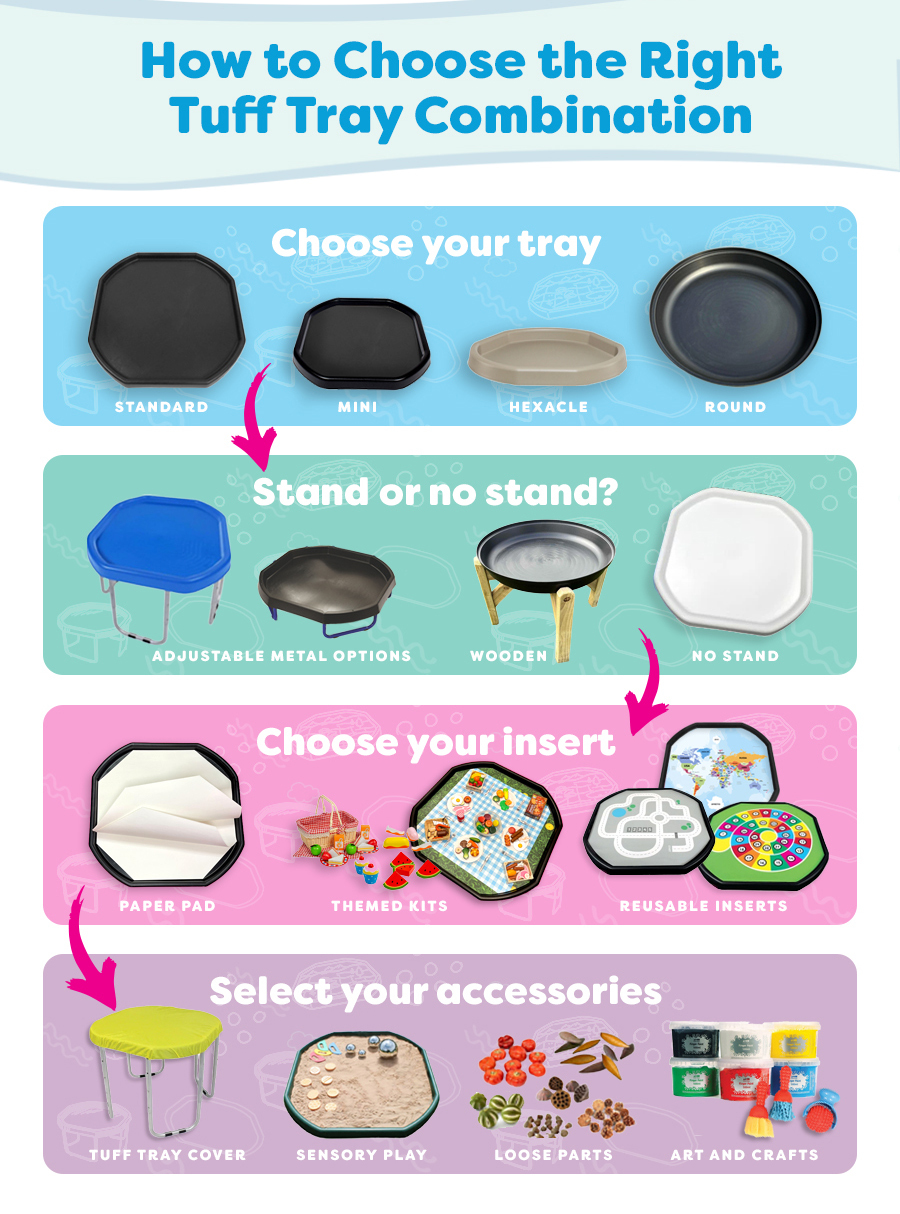
Step 1: Choose Your Tuff Tray
The first decision is, of course, the tray itself. Think about where it will be used, how much space you have and how many children will use it at once.
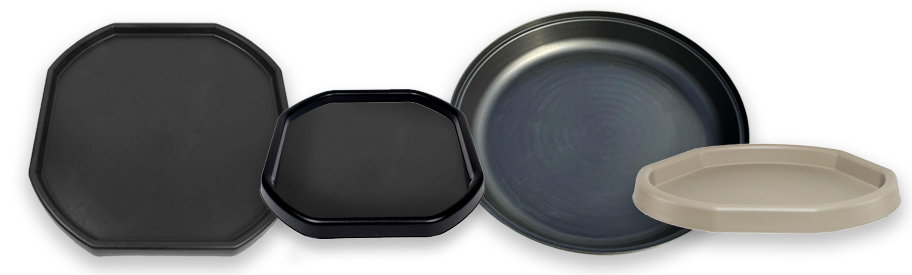
Mini Tuff Trays
A mini tuff tray can be a useful choice for home use, childminders or smaller spaces. Its compact size makes it easier to store while still providing plenty of opportunities for sensory play, mark making, small world play and creative activities.
If you're working with one or a small number of children, a mini tray can provide a manageable activity space without taking over the room.
Standard Tuff Trays
A standard tuff tray gives children a larger area to explore and is a versatile choice for nurseries, preschools and schools.
The additional space can be useful when several children are playing together or when you're setting up activities involving larger materials, small world scenes or sensory play.
Deep Round Tuff Trays
If sensory and messy play are a particular focus, consider a deeper tray. The additional depth can be useful for activities involving materials such as sand, water and other sensory resources.
Hexacle Tuff Trays
If collaborative play is important to you, the Hexacle offers a different shape and a generous shared play space. It can provide an interesting alternative to a traditional rectangular tuff tray.
Step 2: Decide whether you need a tuff tray stand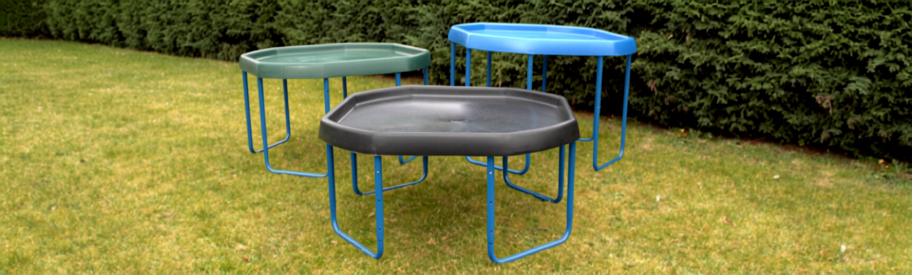
Once you've chosen your tray, think about whether you want to use it on the floor or at a raised height.
A floor-level tuff tray can be ideal for some activities and younger children, while a stand can create a more comfortable height for standing or seated play.
A stand can be particularly useful if your tuff tray will be used for:
- Mark making and painting
- Construction
- Gardening activities
- Sensory play
- Standing activities
- Group play
Adjustable stands can also give you greater flexibility if the tray will be used by children of different ages or for different types of activities.
A quick tip
If you're buying your first tuff tray and know you'll want a stand, it's worth looking at complete tray-and-stand options as well as buying the two products separately.
Step 3: Choose your tuff tray mat, insert or paper pad
Now you've chosen your tray and decided whether you need a stand, it's time to think about the surface.
The right mat, insert or paper pad can transform the same tuff tray into a completely different activity area.
Paper pads
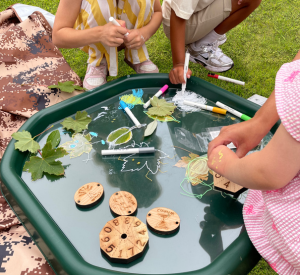
A paper pad is a simple way to turn your tuff tray into a large creative and mark-making space.
Use it for drawing, painting, pattern making, early writing and collaborative artwork.
For more ideas, you can also explore our 10 Tuff Tray Paper Pad Activities Linked to the 7 Areas of EYFS Learning.
Reusable mats
Reusable mats are a practical option if you want to change your activities regularly while keeping the same tray.
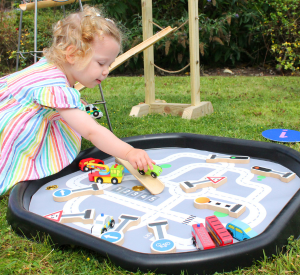
They can provide a ready-made backdrop for small world play, sensory activities, mark making and other open-ended play.
Themed Inserts
Want to create a dinosaur world, farm, city or space scene? A themed insert can give children an immediate starting point for imaginative play.
Browse Tuff Tray Inserts & Mats →
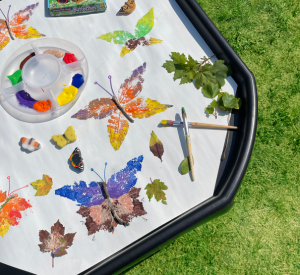
Step 4: Choose your tuff tray accessories
You don't need a huge collection of accessories to get started. Instead, think about how you want to use your tuff tray and choose versatile resources that can be used across different activities.
| If you want to focus on... | Consider adding... |
|---|---|
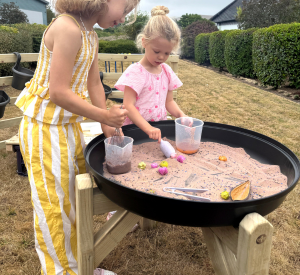
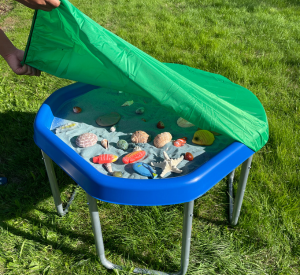
| Sensory play | Scoops, containers, funnels and tools |
| Mark making | Paper pads, crayons, paint and brushes |
| Small world play | Themed mats, figures, vehicles and loose parts |
| Outdoor play |
Natural resources, pots, containers and gardening tools |
The great thing about a flexible tuff tray setup is that you can change the contents without changing the tray itself.
Explore Tuff Tray Accessories →
Bundle or Buy Separately?
If you're starting from scratch, you may be wondering whether it's better to buy a complete tuff tray bundle or choose each component individually.
The answer depends on what you already have and what you need.
| A bundle could suit you if... | Buying separately could suit you if... |
|---|---|
| You're setting up your first tuff tray | You already own a tray |
| You need several components | You already have a stand |
| You want a ready-made setup | You only need a new mat or insert |
| The included products suit your needs | You want to choose specific accessories |
Our top tip: compare the current price of a complete bundle with the cost of buying the equivalent products individually. Most importantly, check that the bundle contains everything you actually need.
If you're setting up a new provision from scratch, a start-up bundle can also save you time because the main components have already been put together for you.
Three Tuff Tray Combinations to Get You Started
Still not sure what your setup could look like? Here are three simple combinations to consider.
1. The Starter Setup
Ideal for: Home use, childminders and first-time buyers.
Consider:
- Mini or standard tuff tray
- Stand, if required
- One versatile mat or paper pad
- A small selection of reusable tools
This gives you a flexible starting point without needing to buy lots of resources at once.
2. The Nursery Setup
Ideal for: Nurseries, preschools and early years classrooms.
Consider:
- Standard tuff tray
- Adjustable stand
- Reusable mat or paper pad
- Selection of sensory and creative accessories
This creates a flexible activity space that can be adapted to different interests, themes and areas of learning.
3. The Sensory Setup
Ideal for: Settings where sensory and messy play are a regular part of provision.
Consider:
- Deep Round Tuff Tray
- Suitable stand
- Sensory mat or insert
- Scoops, containers and other tools
You can then change the contents of the tray to create completely different experiences.
What Can You Do With a Tuff Tray?
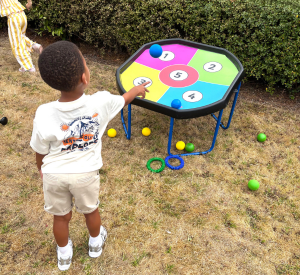
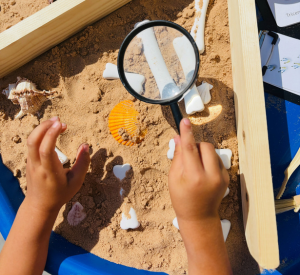
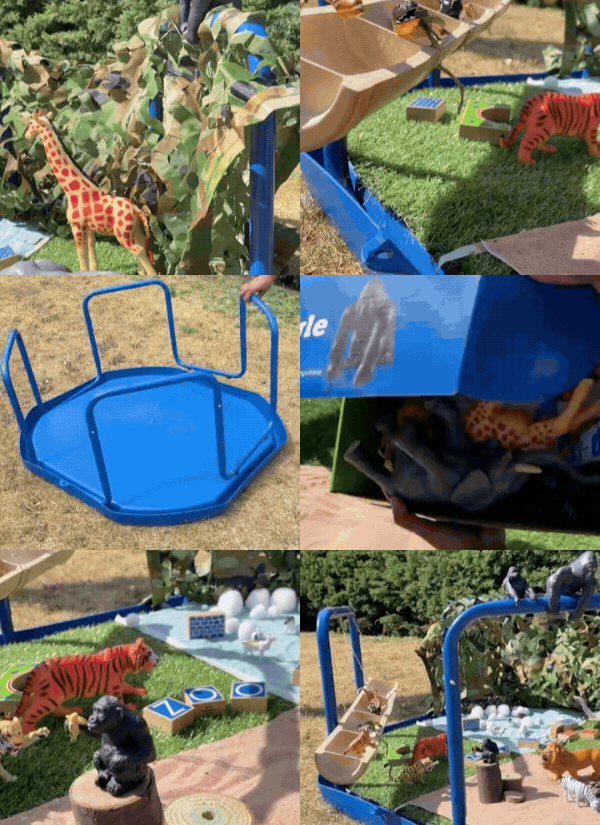
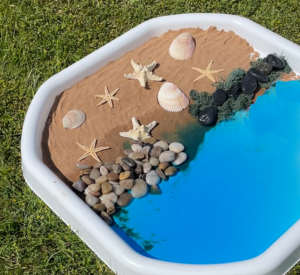
Once you've chosen your basic setup, the possibilities are almost endless. Use your tuff tray for mark making, small world play, sensory exploration, construction, sand and water play or outdoor learning.
You don't necessarily need a different tray for every activity. Simply changing the surface, materials and accessories can create a completely new play experience.
Looking for activity inspiration?
You Don't Need to Buy Everything at Once
One of the best things about a tuff tray is that you can build your setup over time.
Start with the essentials:
Tray → Stand → Mat or paper pad → A few accessories
Then, as you discover what the children enjoy, you can add themed inserts, sensory resources, small world figures, seasonal resources and other accessories.
This also means you can refresh your activities without replacing your entire tuff tray setup.
Tuff Tray Buying Checklist
Before you choose your tuff tray combination, ask yourself:
☐ Who will use it?
Home, childminding, nursery or school?
☐ How much space do you have?
Would a mini tray be suitable, or do you need a larger surface?
☐ How will it be used?
Floor level, seated or standing?
☐ What type of play do you want to encourage?
Sensory, creative, small world, construction or outdoor play?
☐ Do you need a mat, insert or paper pad?
☐ Would a bundle or individual products suit you better?
Once you've answered these questions, choosing your tuff tray combination should be much simpler.
Frequently Asked Questions
What size tuff tray should I buy?
Think about the space you have available, how many children will use the tray and the types of activities you want to provide. A mini tray can be useful for smaller spaces, while a standard or larger tray provides more room for collaborative play.
Do I need a tuff tray stand?
Not necessarily. Tuff trays can be used at floor level, but a stand can provide a raised surface for standing or seated activities. Consider how the tray will be used before deciding.
What should I put in a tuff tray?
This depends on the activity. You could use a paper pad for mark making, a themed insert for small world play, or sensory materials with scoops and containers for messy play.
Is it better to buy a tuff tray bundle?
A bundle can be convenient if you're starting from scratch and need several components. If you already own some of the essentials, buying individual products may give you more flexibility. Compare the current prices and check what's included before you decide.
Can I add accessories to my existing tuff tray?
Yes. Adding new mats, inserts and accessories is an easy way to change or extend your existing setup without buying a completely new tray.
Build Your Tuff Tray Your Way
There isn't one combination that's right for everyone.
The best place to start is by thinking about your space, the children who will use the tray and the type of play you want to provide.
Choose your tray, add a stand if you need one, select a play surface and then add accessories that can be used in different ways.
And remember — you can always add to your setup later.
Ready to get started?
Shop Tuff Trays
Shop Tuff Tray Stands
Shop Tuff Tray Inserts & Mats
Shop Tuff Tray Kits
