

8 Benefits of Mud Kitchens in Early Years (EYFS Explained)
Posted by EYR Team on 4th May 2026
read more
Outdoor play is a vital part of early childhood development, and one of the most engaging ways to support it is through a mud kitchen. Simple, creative, and highly versatile, mud kitchens provide children with opportunities to explore, experiment, and learn through hands-on play.
In this guide, we break down 8 key benefits of mud kitchens in early years settings, explain how they link to the EYFS framework, and share practical ideas for getting started.
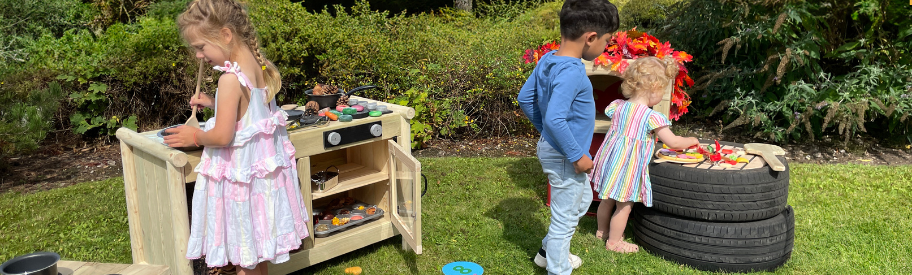
What is a Mud Kitchen?
A mud kitchen is an outdoor play setup where children mix natural materials such as soil, water, sand, and leaves in a role-play "cooking" environment. Often equipped with pots, pans, utensils, and surfaces, mud kitchens encourage imaginative, sensory-rich play.
They are widely used in nurseries, preschools, and reception classes as part of outdoor learning provision.
8 Benefits of Mud Kitchens in Early Years (EYFS Explained)
1. Supports Physical Development
Mud kitchens encourage digging, pouring, stirring, and carrying. These actions help develop both fine and gross motor skills, supporting coordination, strength, and control.
2. Encourages Communication and Language
Role-play naturally leads to conversation. Children talk, negotiate, and tell stories while playing, helping to build vocabulary and communication skills.
3. Builds Personal, Social and Emotional Development
Mud kitchens promote teamwork, sharing, and turn-taking. Children gain confidence as they explore freely and express their ideas.
4. Promotes Imaginative and Creative Play
Open-ended play allows children to create their own scenarios, such as running a café or inventing recipes. This supports creativity and problem-solving.
5. Enhances Understanding of the World
Children explore natural materials and observe changes when mixing them. This hands-on experience supports early scientific thinking and curiosity.
6. Supports Mathematical Development
Children naturally explore counting, measuring, and comparing. Concepts such as full, empty, heavy, and light are introduced through play.
7. Encourages Sensory Exploration
Mud kitchens provide rich sensory experiences through textures, temperatures, and materials, supporting sensory development and engagement.
8. Promotes Outdoor Learning and Wellbeing
Outdoor play supports physical health and wellbeing. Mud kitchens encourage fresh air, movement, and a connection with nature.
Mud Kitchen Ideas for Early Years Settings
To keep children engaged and extend learning, try introducing:
- Seasonal themes (e.g. autumn leaf soups, spring potions)
- Role-play setups such as cafés or bakeries
- Natural materials like sticks, stones, herbs, and flowers
- Water play using jugs, buckets, and funnels
- Simple recipe cards to guide play
These ideas help maintain interest and encourage deeper learning.
How to Set Up a Mud Kitchen
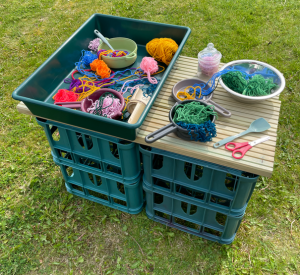
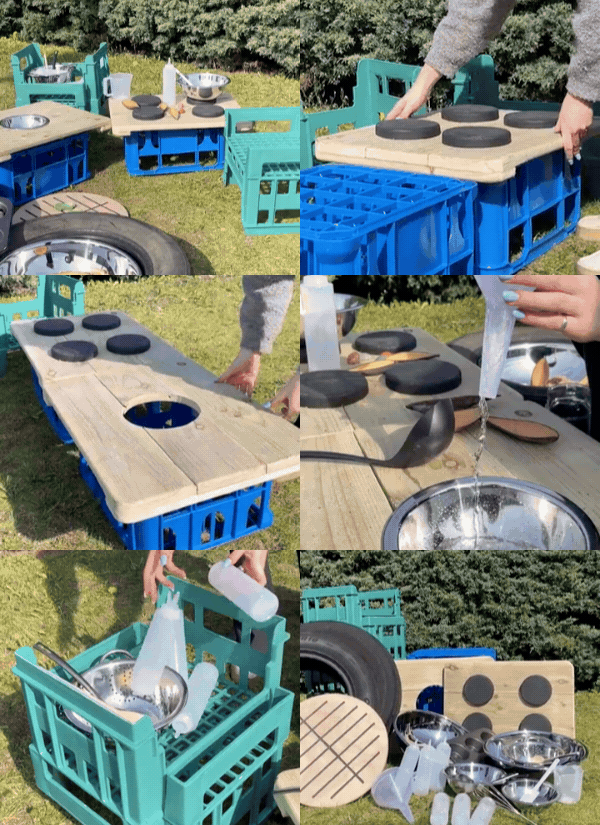
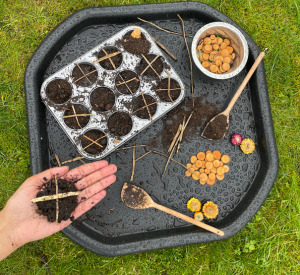
Setting up a mud kitchen can be simple and cost-effective. You could consider a ready built kitchen unit or create more modular upcycled structures using crates and crate toppers, tyres and planks! Below are 4 points to consider when setting up your kitchen.
1. Choose the Right Space
Select a safe outdoor area with enough room for children to move and explore freely.
2. Provide Basic Equipment
Consider including any of the following:
- Pots and pans
- Utensils and spoons
- Bowls and containers
- A sturdy surface or table
3. Add Natural Materials
Provide access to soil, sand, water, leaves, and other natural elements.
4. Consider Safety
Ensure materials are safe, supervise children during play, and encourage handwashing afterwards.
Frequently Asked Questions
What age is a mud kitchen suitable for?
Mud kitchens are suitable for a wide age range, from toddlers through to early primary school children.
Are mud kitchens safe?
Yes, when used with appropriate supervision and safe materials, mud kitchens are a safe and valuable play resource.
How do mud kitchens support EYFS?
Mud kitchens support all seven areas of learning within the EYFS framework, particularly physical development, communication and language, and understanding the world.
Final Thoughts
Mud kitchens are a simple yet powerful way to support learning in early years settings. They encourage creativity, exploration, and skill development while aligning closely with the EYFS framework.
By incorporating a mud kitchen into your outdoor provision, you can create meaningful, engaging learning experiences for children.
We would love to see your mud kitchens! Share your images with us on social media by tagging us or using the hashtag #ExploreWithEYR!
