

The Importance of Literacy in the Early Years
Posted by EYR Team on 29th Jun 2026
read more
Literacy is one of the most important foundations of early childhood development. In the Early Years Foundation Stage (EYFS), literacy is not just about learning to read and write—it begins much earlier through communication, language development, listening, storytelling, and mark-making.
Strong early literacy skills help children become confident communicators, enthusiastic readers, and capable writers as they progress through school and beyond.

What is Early Years Literacy?
In EYFS, literacy refers to a broad range of skills that support reading and writing development. These include:
- Speaking and listening
- Understanding and using vocabulary
- Phonological awareness (recognising sounds in words)
- Story comprehension
- Early mark-making and writing skills
Literacy develops gradually through everyday interactions, play, and exposure to rich language environments.
Why Literacy is Important in Early Years
Early literacy development has a long-lasting impact on a child’s educational journey and overall life outcomes.
1. Supports Brain Development
Early language and literacy experiences help build neural connections that support communication, memory, and learning.
2. Builds Communication Skills
Children learn to express their thoughts, feelings, and ideas clearly, both verbally and non-verbally.
3. Encourages a Love of Reading
Positive early experiences with books and stories help children develop enjoyment and curiosity about reading.
If you’re looking for practical ways to support this, you may also like our guide on Storytelling Activities in EYFS
4. Develops Early Writing Skills
Mark-making, drawing, and symbolic play lay the foundation for formal writing later on.
5. Supports School Readiness
Children with strong early literacy skills are better prepared for the transition into primary education.
EYFS Curriculum Links (2026 Framework)
Literacy in the EYFS is closely linked to other areas of learning:
Communication and Language
- Listening and attention
- Understanding spoken language
- Speaking clearly and confidently
Personal, Social & Emotional Development (PSED)
- Confidence in expressing ideas
- Engagement in group storytelling and discussion
Expressive Arts & Design
- Storytelling through role play
- Creative mark-making and drawing
These areas work together to build a strong foundation for lifelong literacy skills.
How Literacy Develops in the Early Years
Literacy is a developmental journey that progresses through key stages:
Listening and Attention
Children begin by listening to stories, sounds, and conversations.
Speaking and Vocabulary
They start to use new words, form sentences, and communicate ideas.
Story Understanding
Children begin to retell stories, predict outcomes, and discuss characters.
Early Phonics Awareness
They recognise sounds in words and begin to understand sound-letter relationships.
Early Writing and Mark-Making
Children experiment with drawing, scribbling, and eventually forming letters.
The Benefits of Early Literacy Development
Strong literacy foundations in EYFS support:
- Improved language and communication skills
- Greater confidence in self-expression
- Stronger cognitive and problem-solving abilities
- Enhanced creativity and imagination
- Better long-term academic outcomes
- Increased social interaction skills
Practical Literacy Activities for EYFS
Early literacy is best developed through meaningful, play-based experiences.
Storytelling Activities
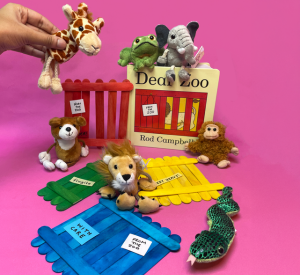
- Story sacks with props and objects
- Re-enacting familiar stories using puppets
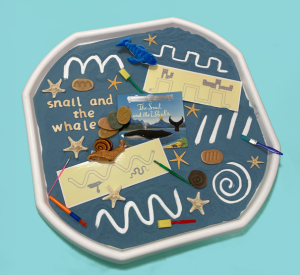
- Creating story maps together
Mark-Making Opportunities
- Sensory writing trays (sand, foam, rice)
- Outdoor writing with chalk or natural materials
- Large-scale painting and drawing
Language-Rich Play
- Role play areas (shops, homes, doctors)
- Small world storytelling setups
- Adult-led vocabulary expansion during play
Phonics & Sound Play
- Listening games (sound matching)
- Rhyming activities
- Environmental sound hunts
For more inspiration, take a look at our blog: 10 EYFS Literacy Activities

The Role of the Practitioner
Practitioners play a vital role in supporting early literacy by:
- Modelling rich and varied language
- Asking open-ended questions
- Extending children’s vocabulary
- Supporting storytelling and conversation
- Observing and documenting communication development
Rather than directly instructing, practitioners guide and enhance learning through interaction and environment design.
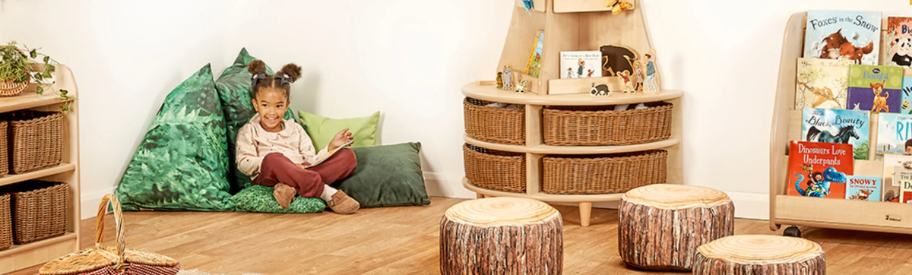
Creating a Literacy-Rich Environment
A strong EYFS setting supports literacy through:
- Accessible books and reading areas
- Labels and print throughout the environment
- Opportunities for writing in all play areas
- Storytelling resources and props
- Regular reading sessions and shared stories
FAQs
Why is literacy important in the early years?
Literacy supports communication, cognitive development, and future academic success by building strong language foundations early in life.
What are early literacy skills?
They include listening, speaking, vocabulary development, phonological awareness, reading comprehension, and early writing skills.
How can you support literacy in EYFS?
Through storytelling, role play, mark-making activities, reading aloud, and creating language-rich environments.
When does literacy development begin?
Literacy begins from birth through exposure to language, sounds, and communication.
Conclusion
Literacy in the early years is the foundation for all future learning. By providing rich language experiences, meaningful play opportunities, and supportive environments, practitioners can help children develop the communication, reading, and writing skills they need to thrive.
Strong early literacy does not start with worksheets—it starts with conversation, storytelling, and play.