

The Importance of Doll Play and Diversity in Early Years Settings (with Imaginative Play Ideas)
Posted by EYR Team on 14th Sep 2026
read more
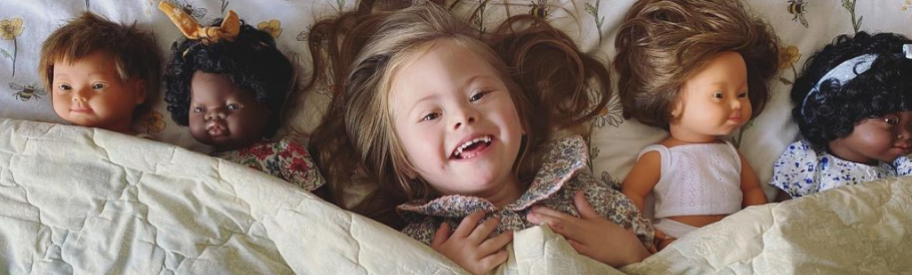
Children just love to take care of their very own baby! From a very early age, children begin to explore the world around them and imitate actions and behaviours they have seen through pretend play. They start adopting roles of characters they have observed, and one of the ways they do this is through doll play.
In this blog, we cover the importance of inclusive children’s dolls in early years as well as imaginative play activities to encourage play and promote diversity in an early years setting.
Is doll play really that important?
Yes! Playing with dolls is a popular way for young children to engage in imaginative play by mimicking real-life routines and acting out their own stories to build empathy and social skills – all of which are vital for a child’s development.
A doll is more than just a toy for kids, they can also be a friend and companion. Doll play allows children to express their creativity and can inspire shy children to join in with circle time. Children use pretend play to practice future roles as adults and when they care for dolls like babies, it encourages them to develop a nurturing attitude towards others.
Imaginative doll play is important for developing young children’s confidence in their ability to solve problems and interact with their environment. It encourages them to practice language and helps children develop fine and gross motor skills so it is essential that you positively promote doll play in your early years setting to enhance a child’s development and learning.
How to create an inclusive environment with multicultural dolls
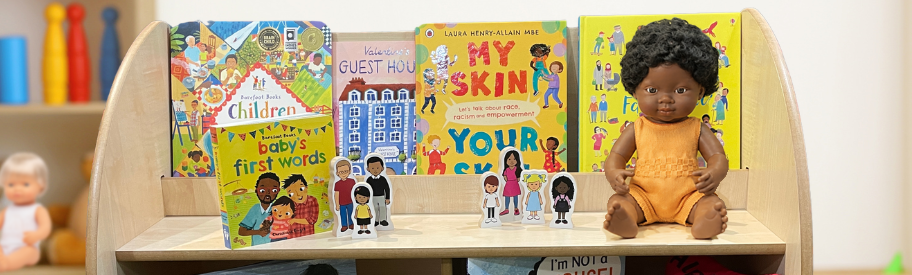
Children become very self-aware at a young age, so it is important to encourage the celebration of diversity. Multicultural doll play helps promote the celebration of cultural differences, similarities and diversity. Having a cultural variety of dolls in your school also encourages a child’s self-acceptance, self-identification, self-esteem and confidence which are all vital for a child’s development.
Celebrate the diversity of our world with dolls in a variety of skin tones to represent different ethnicities and characteristics. Our lovable multicultural doll collection represents cultures from around the world, including Europe, Latin America, Africa and Asia!
Dolls with Down's Syndrome
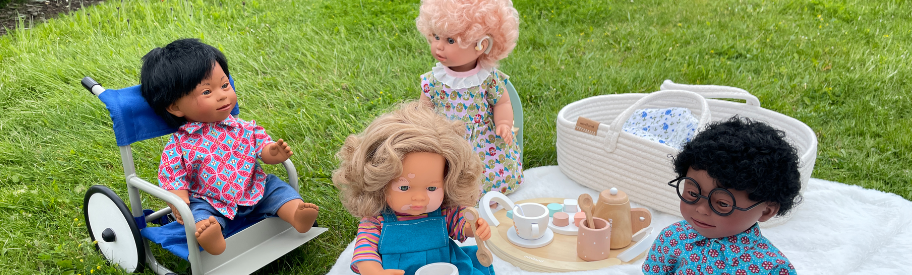
Enhance your setting's doll collection with dolls representing Down's syndrome to further inspire the celebration of diversity in your early years setting. Children enjoy having toys that they can identify with and these dolls allow children with Down’s syndrome to experience having a doll “just like me”. By adding dolls with Down’s syndrome to your early years environment, children will also be able to gain a better understanding and acceptance of those with disabilities.
Providing adaptive doll accessories such as toy wheelchairs and hearing aids is another simple way to create more inclusive dolls in your learning setting and help young children understand differing abilities and raise awareness of different special needs.
5 EYFS Imaginative Play Ideas
1. Doll washing and dressing up
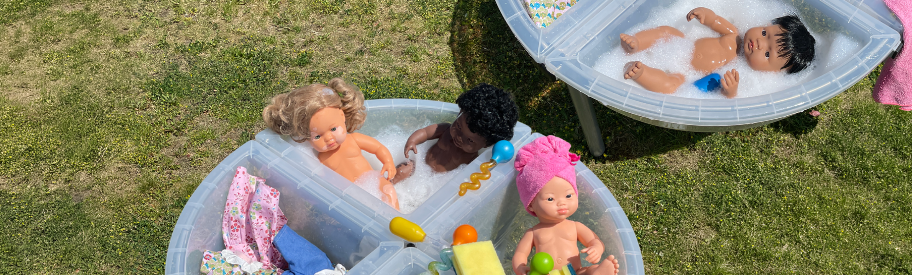
Make bath time bubbly, messy and lots of fun with this hands-on doll play activity! Fill a water table with warm water, soap and sponges, then let children wash their dolls while practising pouring, squeezing and scrubbing. Once the dolls are sparkling clean, move over to the dressing station where they can dry and dress up their dolls. It’s a playful way to explore everyday hygiene routines, build independence skills, all while having plenty of bubbly fun!
2. Make royal robes and crowns
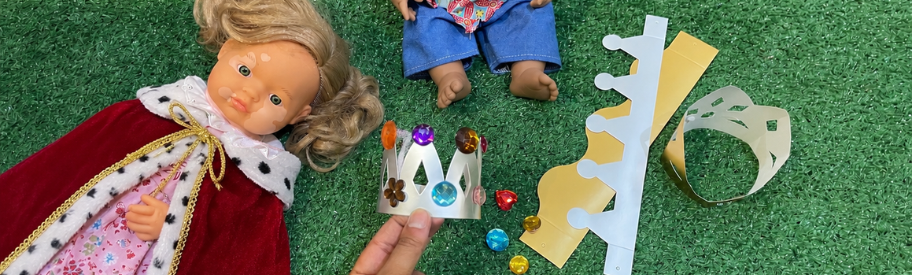
Let imaginations rule with a fun Kings and Queens doll play activity! Create your very own royal characters using colourful craft materials, dressing dolls in fancy robes made from textured fabrics and decorating metallic crowns with glitter, gems, sequins and jewels. Once dressed for the royal ball, your dolls are ready for storytime adventures and small world play!
3. Doctor dolls hospital role play

Children can explore the topic of "People Who Help Us" as they pretend to be doctors and examine friends and dolls with stethoscopes and thermometers. Dress the dolls in career outfits and set out hospital role play toys to encourage children to take care of their dolls. Practice fine motor skills by applying plasters and bandages and use the doctor kit to make all the dolls fit and healthy again!
Remind children of the importance of washing their hands to stop the spread of germs with our printable download to extend learning in this activity.
4. Match the feelings to the emotions
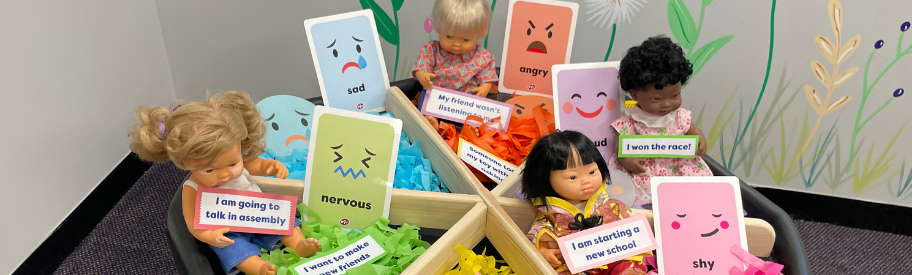
Learn and name different feelings by matching them with real-life scenarios for each of your dolls. Is the doll missing mummy? Has the doll lost her favourite book? Once the feelings are identified, explore what you can do to make them feel better. This fun activity helps toddlers to develop an emotional vocabulary from an early age. Add emotions resources to help teach children the different types of emotions with flash cards and discs portraying the most expressed emotions.
5. Doll picnic with pretend play toys
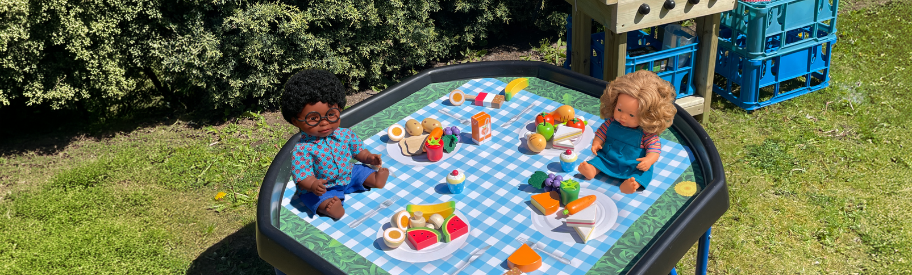
Invite friends to bring their dolls to a picnic party! Roll out the Tuff Tray Picnic Mat for an indoor or outdoor feast with your dolls and encourage conversations around healthy eating and balanced diets. Take turns cooking the play food on the barbecue, then serve up dinner on the classic blue gingham blanket design, complete with plates and cutlery for four!
Dolls and Imaginative Play Resources at EYR
Our diverse selection of dolls ranges from rag dolls and soft-bodied dolls to baby dolls and soft-vinyl dolls. We also stock a wide variety of accessories for dolls, including doll clothing, doll prams and strollers, doll carriers, doll beds, doll houses and cradles, doll baths, doll high chairs, and much more!
- Anatomically correct, authentic characteristics.
- Articulated head, arms and legs
- Vanilla scented & washable
- Made using high quality, soft, recyclable vinyl
Take a look at our extensive range of Dolls and Accessories and Diverse World Resources and enrich the collection of imaginative play resources in your nursery, primary school or early years setting today.
Which EYFS areas of learning can doll play support?
All of them! By tailoring the activities to the area of learning, you can support key areas of children’s learning and development, from Understanding the World by role-playing family dynamics to Communication and Language by talking to their dolls and incorporating them into various stories and scenarios.
Is doll play beneficial for boys as well as girls?
Yes! Doll play allows opportunities for all children to learn through play and can help prepare them for real-life scenarios such as becoming a big brother or sister. Practice gentle care routines such as putting a baby to bed, feeding time and walking around safely while carrying a baby doll.
What age is doll play suitable for?
From the age of 2-3 years, toddlers begin to mimic social interactions with their toys. As they get older, children create imaginative role-play stories and can follow the steps of doll play activities. There are no strict limits to how old a child can be to enjoy doll play.
What are your thoughts on doll play in schools? Let us know on Facebook or Instagram by tagging us or using the hashtag #ExploreWithEYR
