
Introducing Pride in Early Years Settings: Inclusive EYFS Activities, Ideas & Guidance
Posted by EYR Team on 18th May 2026
read more
What is Pride Month?
Pride Month is celebrated every June and marks the anniversary of the Stonewall Uprising in 1969, a key moment in LGBTQ+ history. It is a time to celebrate identity, love, inclusion and the diversity of people and families within our communities.
In early years education, Pride is not about teaching complex adult themes. Instead, it is about introducing values such as kindness, respect, acceptance, and belonging in age-appropriate ways.
Children in EYFS are naturally curious about the world around them. Introducing Pride helps them understand that everyone is different — and that difference should be celebrated.
Why introduce Pride in Early Years settings?
Including Pride and LGBTQ+ awareness in early years practice supports several key areas of development:
- Building empathy and emotional understanding
- Supporting communication and language through discussion
- Encouraging respect for different families and identities
- Promoting self-esteem and belonging
- Supporting the EYFS “Understanding the World” topic
Children may already notice that families look different, or that people express themselves in different ways. Early years settings have an important role in shaping how children understand and respond to those differences.
Creating an inclusive Early Years environment
Before introducing Pride-themed activities, it is important to ensure your setting reflects inclusive practice all year round.
Key considerations include:
- Using inclusive language such as “families” or “grown-ups” instead of assuming “mums and dads”
- Avoiding gender stereotypes in resources and activities
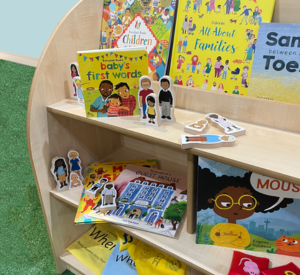
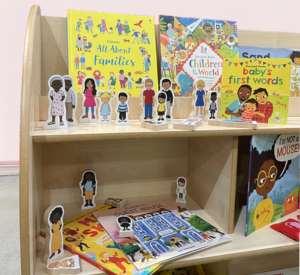
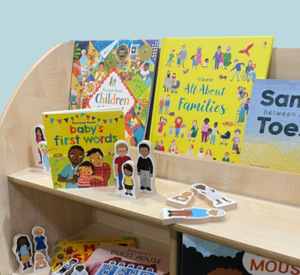
- Providing diverse books, posters and images
- Ensuring children see representation of different families and identities
- Regularly reviewing your environment for inclusion (room audit approach)
An inclusive setting should reflect the real world children live in and help every child feel seen and valued.
How to introduce Pride in EYFS (age-appropriate approaches)
Pride can be explored in simple, meaningful and play-based ways. The focus should always remain on kindness, love and inclusion.
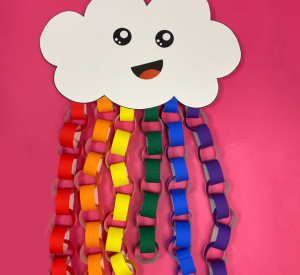
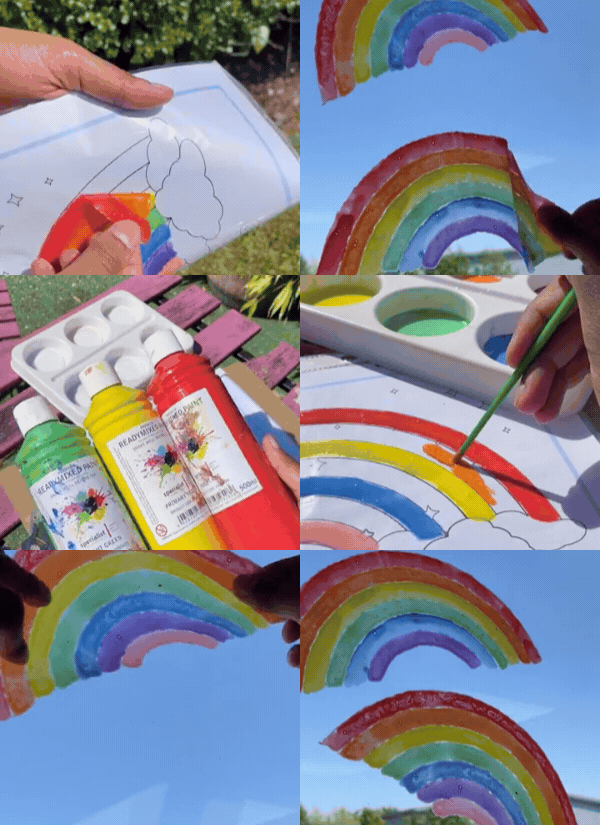
1. Rainbow-themed learning and discussion
Rainbows are often used as a visual representation of Pride and can be a useful starting point for conversation.
Activities could include:
- Rainbow painting or collage work
- Colour mixing investigations
- Rainbow water play or sensory trays
- Ribbon dancing and movement activities

2. Exploring identity through self-portraits
Self-portrait activities are a powerful way for children to build self-awareness and confidence.
Encourage children to:
- Draw or paint themselves using a variety of materials
- Talk about what makes them special
- Share similarities and differences with peers in a positive way
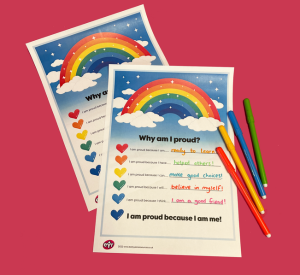
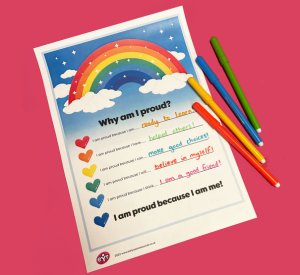
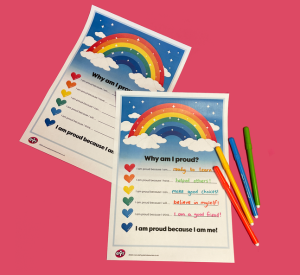
- Complete the "I am Proud because..." download to encourage self-reflection and boost self-confidence
This supports emotional development and helps children develop a strong sense of identity.
3. Celebrating different families
A key message in EYFS Pride learning is that all families are different.
You can support this through:
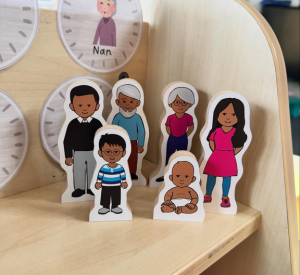
- Drawing or collage activities showing “my family”
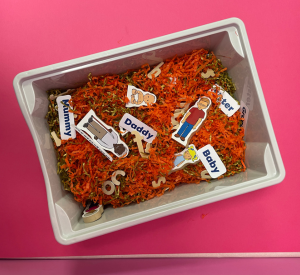
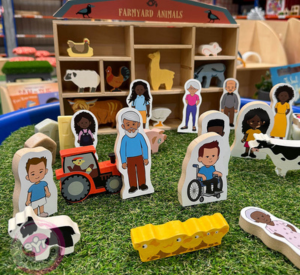
- Using small world figures to represent different households
- Storytelling about different types of families
This helps children understand that love and care come in many forms.
4. Inclusive storytime and books
Books are one of the most effective ways to introduce diversity in Early Years settings.
Choose stories that reflect:
- Different family structures
- A range of identities and experiences
- Messages of kindness and acceptance
Examples often used in EYFS settings include:
- stories about diverse families
- books celebrating individuality - for example Elmer or the Rainbow Fish
- narratives that focus on friendship and belonging
Story discussions can naturally lead to questions about differences in a safe and simple way.
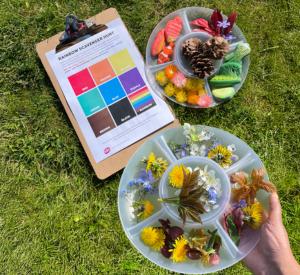
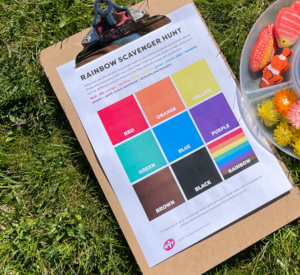
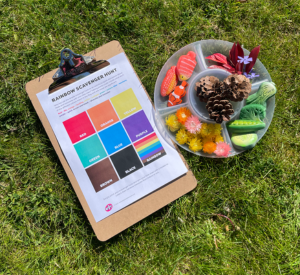
5. Rainbow scavenger hunt activity
A rainbow scavenger hunt is a fun way to combine movement, exploration and learning.
Children can:
- Find objects matching rainbow colours
- Sort items into colour groups
- Discuss what each colour represents
You can also extend learning by exploring ideas such as:
- life
- nature
- harmony
- diversity
This encourages early symbolic thinking in a gentle, accessible way.
Extending learning: building continuous provision
To deepen learning beyond Pride Month, consider embedding inclusion into continuous provision:
- Role play areas with diverse family representation
- Books available all year round featuring inclusive stories
- Small world resources representing different communities
- Visual prompts that reflect diversity in society
This ensures inclusion is not a “one-off theme” but part of everyday practice.
Working with parents and carers
Open communication helps build trust and consistency between home and setting.
You may wish to:
- Share planned activities in advance
- Explain that learning focuses on kindness and inclusion
- Provide book recommendations for home use
- Encourage families to share their own experiences of inclusion
This helps reinforce positive messages across environments.
Key message for Early Years practice
The most important principle when introducing Pride in EYFS is simplicity.
It is not about explaining complex concepts — it is about helping children understand:
- Everyone is different
- Everyone is welcome
- Everyone deserves kindness and respect
These foundations support lifelong attitudes towards inclusion.
Final thoughts
Introducing Pride into Early Years settings is most effective when it is:
- age-appropriate
- play-based
- consistent throughout the year
- embedded in everyday inclusive practice
When children grow up seeing diversity reflected naturally in their environment, they are more likely to develop empathy, respect and a strong sense of belonging.