

How to encourage friendships in the EYFS
Posted by EYR Team on 8th Sep 2025
read more
The importance of friendship cannot be overlooked for young children. Friends are a source of support, empathy, and encouragement during difficult times. They help children learn how to play together and share their feelings without fear or embarrassment. Early friendships play a huge role in overall development and set the foundations for social interactions in later life. In this blog we share some of our top tips to encourage friendships in the Early Years Foundation Stages (EYFS).
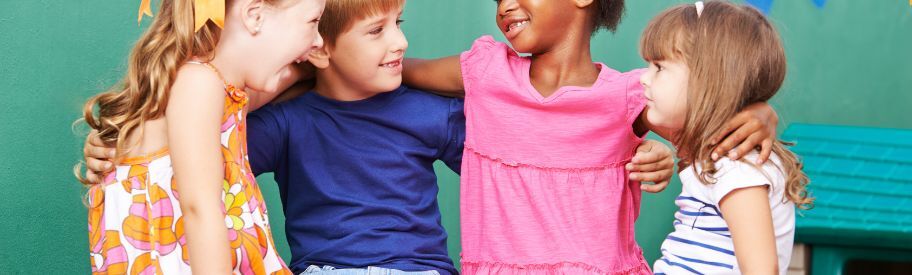
5 Tips to encourage friendships in Early Years' Settings:
1. Provide opportunities for social interaction
Children need to be able to play with other children to develop healthy social skills. They need opportunities for free play and play where there are no rules or goals. Children learn from each other during these interactions, so they need to have the opportunity to engage in them often.
Group activities can be a great way for children to have fun together, while also teaching them how to cooperate and work with others. Some group activities that children can do at school include: telling stories, drawing pictures, singing songs, or making crafts.
2. Encourage interaction between adults and children
Interaction with adults is an important way in which children will learn social interaction as they have the opportunity to "mirror". It provides opportunities for the child to learn about new things, such as how they can make friends or how they can interact with other people in their surroundings.
3. Offer small group activities
Consider sports and other smaller group games that allow children to interact with each other on a more personal level. Other games like tag or hide-and-seek can help children learn how to interact with others by becoming part of the game. Playing these types of games also allows them to try new things and take risks without fear of failure because they are not competing against anyone else.
4. Create a safe space
To encourage friendships in the EYFS, children require a safe space to talk about their feelings. This is a place where they can feel free to express themselves without fear of being judged or criticized. It is also important that the people in the environment are supportive and understanding of what the child might be feeling.
Use props like dolls or emotions stones to discuss feelings about friendship. These will make children feel secure and help to normalise discussions about what they might be feeling.
5. Have an adult lead conversation about friendship
Discussions about what friendship is can be helpful for children to make sense of these relationships. Consider topics along the lines of "what makes a good friend", "who are your best friends", and "how do you like to make friends". This type of conversation is a great way to get children to think and talk more about what friendships mean to them. Consider using props like Conversation Cubes to help spark conversations
Remember, it is important to be mindful of children's age and maturity level. For example, if the child has not yet learned how to read, then using pictures or objects may work better for them.
Friendship is an important part of our lives. It can be challenging to make friends when you are in the early years foundation stage, but we hope that this blog has given you some tips on how to encourage friendships in EYFS. If you are looking for resources to support early development, sense of self, relationships and behaviour, then check out our PSED resources linked below
