
10 Black History Month Activities to Celebrate Diversity in the Early Years
Posted by EYR Team on 7th Sep 2026
read more
What is Black History Month?
Black History Month in the UK is marked every October (February in the US, Canada and Jamaica!) and is a time in which the legacy and achievements of Black individuals is celebrated. These may be individuals who have otherwise been overlooked within history lessons.
Why is this important in Early Years?
Introducing topics related to diversity and inclusion at an early age fosters respect, empathy, and a deeper understanding of the world. For younger children, celebrating Black History Month ties directly into EYFS curriculum goals:
- Personal, Social & Emotional Development – valuing differences and fostering belonging
- Communication & Language – building vocabulary and listening skills
- Understanding the World – learning about past and present role models
10 Activity Ideas to Celebrate Black History Month
1. Traffic Light Game - in honour of Garrett Morgan

The Traffic Light Game (or Stop-Wait-Go) can be a great group activity. Ask children to line up at one end of a room or one end of the playground and stand at the other end. Using a coloured card to signal stop (red) or go (green), challenge children to try and get across the room as quickly as they can without getting caught moving through the red light.
Why not then repeat the game with an additional amber-coloured card to signal children to wait and see what a difference this makes!
Teacher’s notes:
The three-light traffic light system was first invented by Garrett Morgan back in 1923! It all began after Garrett Morgan witnessed a car accident and suggested the amber "wait" light as a simple solution. This suggestion has come to be the standard traffic light system we use almost 100 years later!
2. Nurses Caring Station - in honour of Mary Seacole
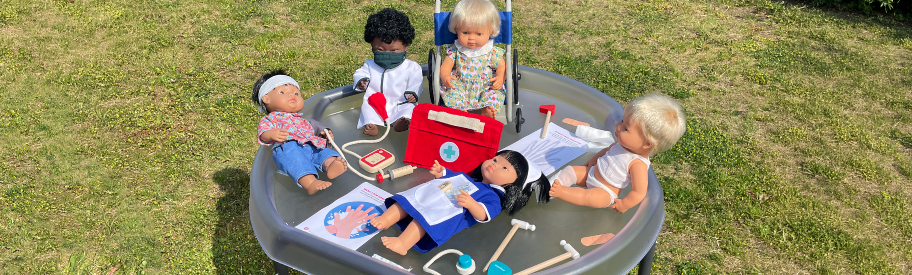
Practice caring for patients with dolls and doctor kits! Encourage children to think about what a nurse would need and how we can show kindness to someone who is feeling poorly. Add pretend food to feed the patients and paper to make get well soon cards with messages of kindness.
Teacher’s notes:
Mary Seacole cared for the sick and injured during the Crimean War. After her application to join Florence Nightingale’s nurses was rejected, Mary used her own money to travel to Crimea (now part of Ukraine) and build the British Hotel to treat soldiers and help them recover with food and medicine. Mary overcame many challenges in her life and is seen as a compassionate role model and pioneer in healthcare!
3. The Telephone Game - in honour of Lewis Latimer

To play the telephone game, ask your children to sit in a circle. Start by telling one child a sentence or a story and ask them to pass it on by whispering into the next person’s ear.
Continue this until the story or sentence gets to the last child in the circle and see what nonsensical phrase this has likely become along the way!
Teacher’s notes:
The telephone was famously invented by Alexander Graham Bell. But did you know that working alongside him was American inventor Lewis Latimer? As well as his work on the telephone in 1876, he also worked on lightbulb filaments, competing against Thomas Edison!
4. Balloon Rocket Race - for Dame Maggie Aderin-Pocock
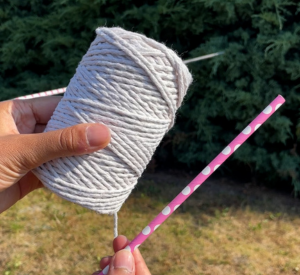
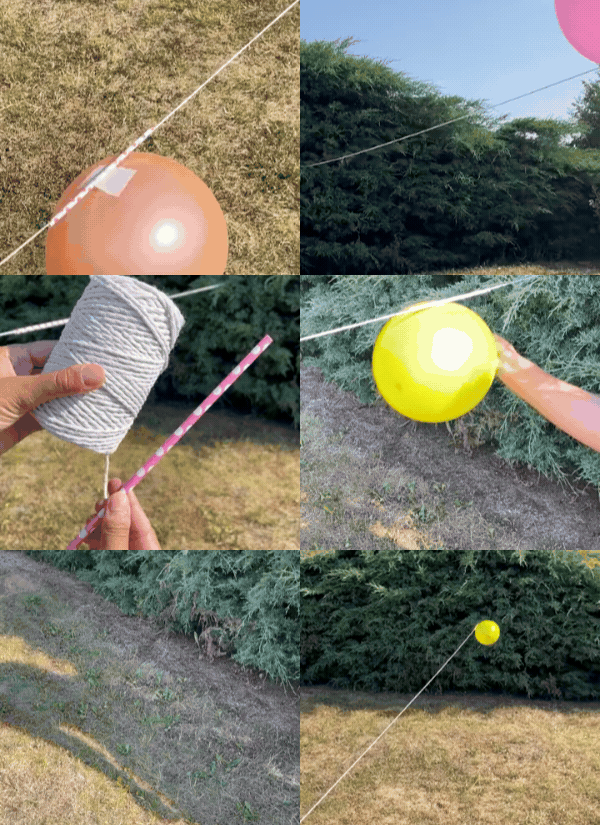
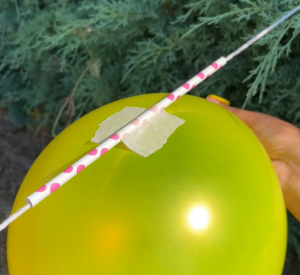
Set up the track for this simple STEAM activity for children by threading string through a straw. Once this is secure, use a piece of tape to attach a balloon to the track. Once the balloon is released, air rushes out, propelling the rocket forward!
Teacher’s notes:
Space scientist and presenter Dame Margaret Ebunoluwa Aderin has made contributions to projects including the James Webb Space Telescope's optical subsystems and the Aeolus satellite instruments. She also co-presents the BBC astronomy program The Sky at Night, which inspires people of all ages to learn more about our universe.
5. Water Blaster Boat Race - celebrating Lonnie Johnson
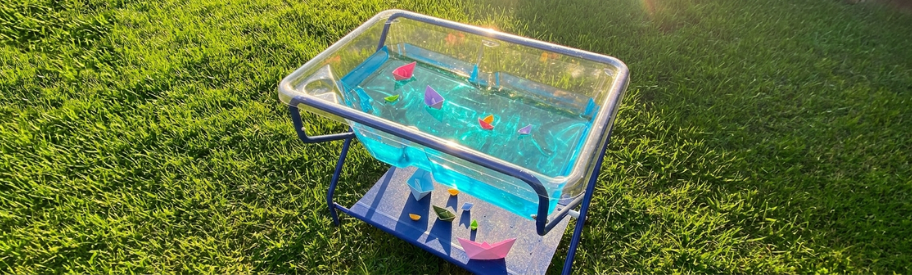
The aim is simple – get your boat from one side of the water table or tuff tray to the other by firing water streams using a water shooter or pipette. Create small boats using paper, sponges or cork pieces that are tied together with an elastic band and race them to the finish line.
Teacher’s notes:
Aerospace NASA engineer Lonnie Johnson found himself experimenting with a new type of fridge system when he discovered a way to propel a powerful stream of water across a room. This accidental discovery resulted in the commonly known water pistol that is used worldwide!
6. Observe Nature Like a Naturalist - inspired by John Edmonstone
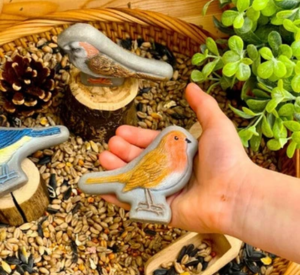
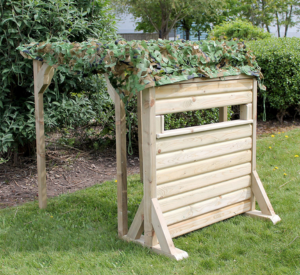
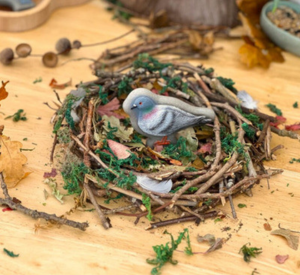
Record which birds and other animals visit your school or garden by spending time outdoors and noting down interesting facts. What does it look like? How many legs or wings does it have? What does it eat?
Children can also design a habitat for their bird by using natural materials or blocks to create a nest. Add tactile sensory bird stones and use a magnifying glass to examine their colourful, detailed markings up close!
Teacher’s notes:
Recognised as one of the "100 Great Black Britons" for his contributions to science, John Edmonstone was a formerly enslaved man who became a teacher and taxidermist. Many students came to John to learn about taxidermy, as this skill was very useful for preserving birds from around the world so they could be studied. One of John Edmonstone's most famous students was none other than Charles Darwin!
7. Ice cream scoop race - inspired by Alfred Cralle
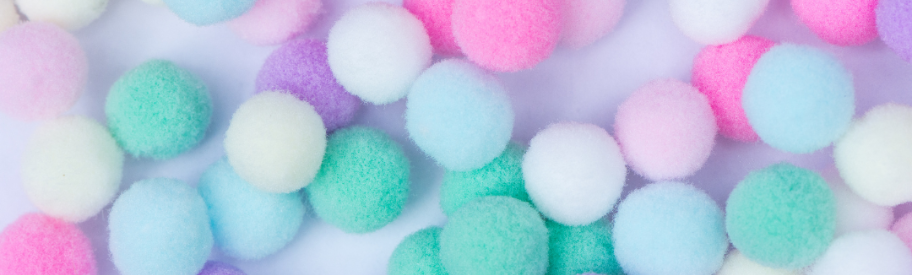
You will need two bowls, a selection of pom poms, a spoon and a scoop for this activity. Start by filling one bowl with pom poms and place the second bowl further away. Next, ask children to transfer the pom poms from the first bowl to the second using the spoon and time them.
Then ask them to repeat the process using a scoop and see what the time difference is. Which way did they find more difficult?
Teacher’s notes:
Whilst working in a hotel, Alfred Cralle, an American businessman and inventor became aware of servers struggling to scoop ice cream onto the cone as it was sticking to the spoons and required multiple utensils to get the ice cream onto the cone. From this, he was inspired to create the famous mechanical ice cream scoop! This 1897 idea is yet another invention that we still use now.
8. Botanical Prints - inspired by Althea McNish
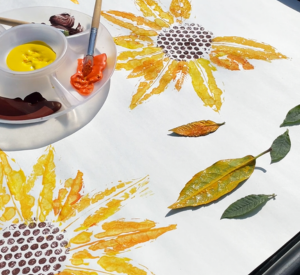
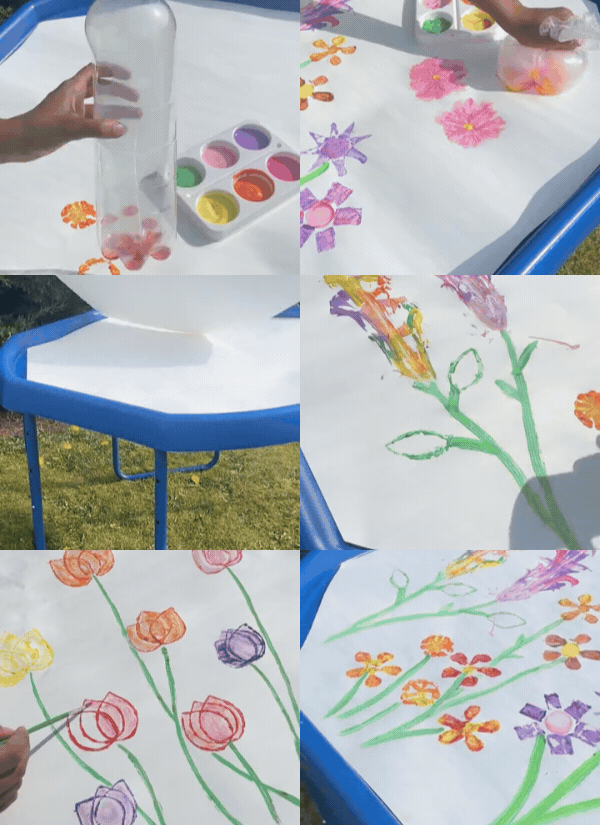
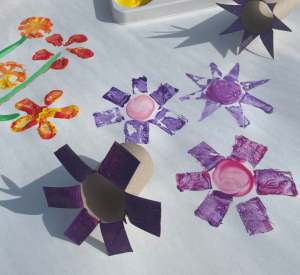
Explore colours, patterns and shapes by using different materials to make your own colourful flower prints. Using a tuff tray paper pad as a canvas, experiment with the ends of a plastic bottle to stamp petals or try using a small bag filled with air and dipped in paint to create peonies.
Teacher’s notes:
Artist and textile designer Althea McNish often used tropical plants from her native Trinidad in her artwork. She is considered to be the first designer of African-Caribbean descent to achieve international recognition!
9. Explore Space - for Mae Jemison
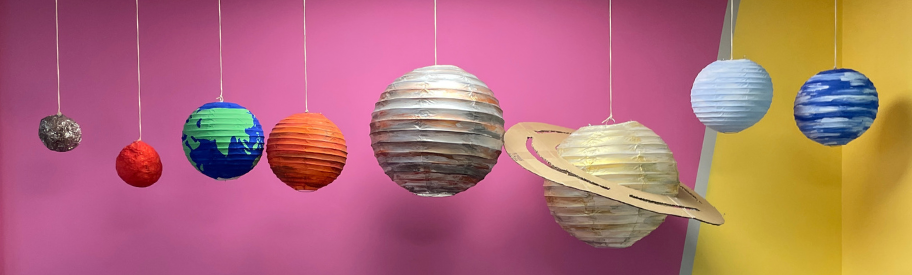
To celebrate Mae Jemison's achievements, why not try one (or several) of these activities:
- Create your own spaceship using cardboard boxes and a bit of imagination
- Create your very own solar system and rockets from various materials like paper and polystyrene balls
- Use a rocket launcher to see how far your little one can make their rocket fly into the air
Teacher’s notes:
Mae Jemison is an American engineer, physician and former NASA astronaut. She became the first black woman to be admitted into the NASA astronaut training programme. Eventually she became the first black woman to travel into space aboard the space shuttle Endeavour in 1992!
10. Make Your Own Race Car - celebrating Sir Lewis Hamilton
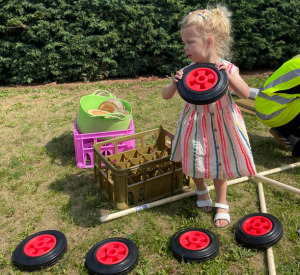
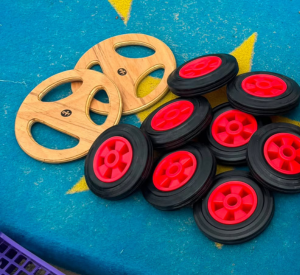
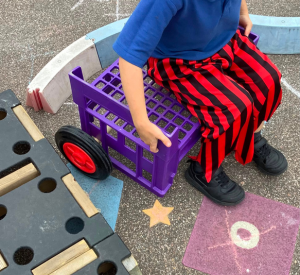
Get crate-ive with loose parts and make your very own race car! This STEM-inspired, problem-solving adventure is perfect for developing motor skills, coordination, and teamwork. Role play as a Formula 1 driver and bring your go-kart creations to life!
Teacher’s notes:
British racing driver Lewis Hamilton began racing go-karts at a young age. He soon rose through the ranks to gain a record-breaking Formula 1 career and in 2020, Lewis was knighted at Buckingham Palace, receiving the title "Sir" for his achievements and contributions to sports and society.
Our Favourite Resources
Below are just a handful of some of our favourite Black History Month resources designed to support lessons around diversity throughout October and beyond.
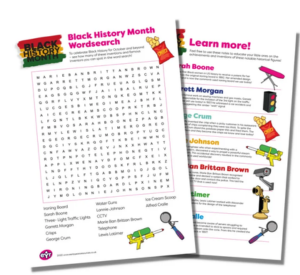
- Downloadable Black History Month Education Pack. See how many of these inventions and famous inventors you can spot in the word search and match up correctly.
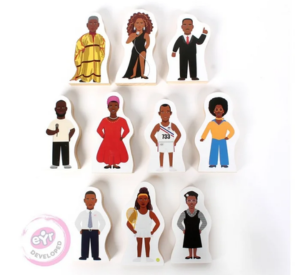
- Famous Black history figures. Black people have made many significant contributions to our culture and society, shaping the dynamic and diverse country we live in today. Figures include Martin Luther King, Rosa Parks and others representing history, sport, politics, fashion and pop culture from across the world.
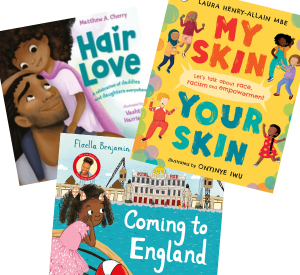
- Black History Book Pack. Add more diversity into your reading area with a collection of powerful stories on the topics of Windrush, race, self-love and self-worth.
Frequently Asked Questions
Are these activities suitable for toddlers?
Yes—adapt with simple games and visual props for younger learners.
How can I approach sensitive conversations?
Keep the tone positive, inclusive, and age-appropriate—focus on celebration and appreciation
Can I do this year-round?
Absolutely! Black History Month is a springboard for a cultural curriculum that stays relevant throughout the year.
Final Key Message for Early Years Practice - Do's and Don'ts
When children grow up seeing diversity reflected naturally in their environment, they are more likely to develop empathy, respect and a strong sense of belonging. Here are some simple do's and don'ts of teaching black history to consider.
- Do be consistent throughout the year in everyday inclusive practice
- Don't treat black history as the distant past
- Do celebrate awareness days and festivals such as Windrush Day
- Do highlight the everyday contributions of those who are not in the spotlight, not just famous figures
- Don't single out black students
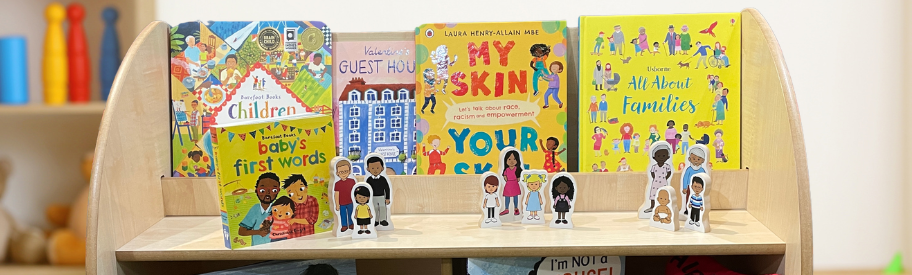
- Do use diverse resources from books to multicultural dolls
- Do celebrate awareness days and festivals such as Windrush Day
We’d love to see your classroom displays, crafts, and activities. Tag us on social media or use the hashtag #ExploreWithEYR.