
How to Make Your Classroom More Engaging
Posted by EYR Team on 21st Jul 2025
read moreBesides the support of a teacher, a positive and engaging classroom environment has been found to be crucial for children’s motivation, behaviour, and overall academic success. This is true for all ages but especially in the formative early years of a child’s life. Primary school aged children are particularly impacted by their environment due to their natural curiosity, attention levels, and the new setting in which they find themselves. In this blog, we go into more detail about this impact, suggest some key elements to consider for your classroom setup, and cover some pitfalls to avoid.

What is the impact of the learning environment in Primary Schools?
The setting in which young children learn, play, and socialise is a vital part in a child’s foundation for learning throughout their young lives. More specifically, it can have a profound impact on the following areas:
Cognitive development and focus: young children are very sensitive to sensory input, and the learning environment can therefore have a significant impact on their concentration and cognitive overload.
Emotional safety: the school environment will be new for many young children and will therefore have an impact on their overall emotions and wellbeing, a thoughtfully designed classroom space can be used to support children’s sense of safety
Independence and responsibility: a considered classroom layout can be used to teach children responsibility over their resources and also independence and free will
Creativity and exploration: the classroom can act as a source of inspiration for young children
Sense of inclusion: the design of your learning space can have an impact on both neurodiverse and neurotypical children to make them feel valued and capable regardless of their needs
Key elements to consider for an engaging classroom environment
Considering the impacts detailed prior, it is important to consider the following when planning your classroom setup:
Seating and layout
Flexible seating and classroom learning zones are a great way to keep children engaged. Having different zones and seating options will provide children with choices and encourage movement, both of which will refresh their curiosity and therefore engagement.
Consider floor cushions, bean bags, rugs as well as zones like reading zones, quiet corners, messy play areas etc.
Accessibility
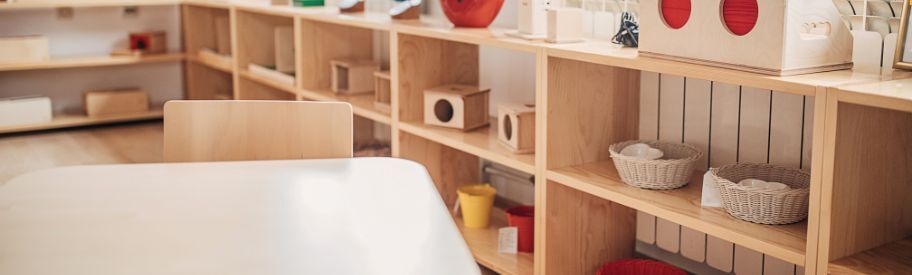
Resources need to be displayed to grab children’s attention to encourage them to interact. Clear labels, child-height storage, and visual cues can all be used to encourage independent learning and accessibility.
Consider a layout that supports children’s autonomy, exploration, and risk-taking confidence.
Use of colour and light
Research has shown that children’s learning can be impacted by the colours in their environment. Cool colours like blue and green have been shown to support creativity whereas warmer colours like orange have been shown to energise learners. Consider different uses of colour as well as neutral/natural tones throughout your classroom to create different areas of learning.
Additionally, make use of natural light where possible as this is also proven to have an impact on children’s performance in the classroom. Where this is not possible, instead consider taking advantage of the light available to optimise your space e.g lighter spaces for learning and darker spaces for storage/furniture.
Flexibility and variety
Consider open-ended resources that can be used flexibly. Single-use equipment can mean children will lose interest quickly as the possibilities are limited.
Avoid “display decay” and refresh your setting by regularly changing displays and other visual stimuli to keep children engaged in their environment.
Outdoor integration
Time outdoors has been shown to benefit not only children’s mental health and wellbeing but has also been linked to increased concentration and engagement in the classroom. Therefore consider an outdoor element to your space that is easily accessible or alternatively, try to find ways of bringing nature into the classroom.
Sensory considerations
Consider soft textures, calming corners, neutral colour displays, and a tidy classroom. This will benefit not only neurodivergent learners but also neurotypical students. To create an inclusive learning environment that keeps children engaged, also consider supporting resources and make sure these are accessible for all children, e.g coloured overlays to aid reading. These should not only be limited to neurodivergent children but all students to facilitate an inclusive environment.
Reflect children’s interests
This not only supports children’s sense of value and inclusion but will naturally peak their interest in a topic if it reflects their interests.
Giving children some control over their learning by allowing them a choice of topics can be highly motivating, when children have a say in their learning they are more likely to be engaged.
Top tips for daily engagement
Some additional tips for daily engagement include:
- Morning rituals with children to get them set up for a day of learning
- Using props to signal transitions in learning
- Assign classroom roles to children to support motivation
- Consider variety, not only in lessons but also displays, resources, and other visuals
FAQs
What should I avoid when considering my classroom setup?
This will be largely dependent on your cohort but some best practices include: over cluttered space and displays, unstructured open spaces, and inaccessible resources.
How can I measure engagement?
Depending on your children’s ages, you can ask for direct feedback or rely on observation and results.
I have a new setting, how do I go about setting up my classroom?
There are lots of resources available to help with classroom set ups whether this is a new space or an old space you wish to revamp. Take a look at some of our blogs on how to do this and alternatively, consider pre-selected bundles of resources or even a room design service if you have the budget for this!
How can I make my classroom more calming?
In terms of your environment, consider natural lighting, pastel or neutral visuals, and avoid clutter. For more guidance on this, check out our blog Addressing Sensory Needs in the Classroom