
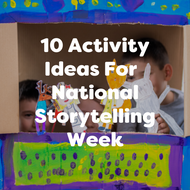
10 Fun Storytelling Activities for Early Years Settings – National Storytelling Week
Posted by EYR Team on 26th Jan 2026
read more
National Storytelling Week is the perfect opportunity to inspire children’s imagination, build language skills, and create memorable experiences in your early years setting. To help you celebrate, our early years expert Emily Hanson shares 10 fun and engaging storytelling activities that you can easily implement with your children. These ideas support literacy, creativity, and confidence while keeping learning playful and exciting.

10 Storytelling Activity Ideas for your Early Years Setting
1. Create Random Story Bags
Fill a bag with a selection of props or toys, these can be as random as you like. Encourage children to explore the bag, select a few items and create a story using them, helping build vocabulary and imagination.
2. Put on a Puppet Show
Use puppets to bring stories to life. Children can create their own characters and act out scenes, developing confidence and storytelling skills.
3. Paint Story Stones
Paint stones with characters, objects, or scenes from stories. Children can pick stones and weave their own narratives, promoting creativity and sequencing skills.
4. Create a Role Play Corner
Set up themed areas inspired by favourite stories. Children can act out roles and stories, enhancing social interaction and imaginative play.
5. Storytelling Circle Time
Organise circle time sessions where children take turns sharing their favourite stories. This helps develop listening, speaking, and narrative skills.
6. Make your own Story Books
By folding paper into halves and sticking them together, children can create their very own books to write their own tale. A great activity for language development and literacy.
7. Integrate Music into Stories
Using a variety of instruments, children can create their own soundtracks to accompany a story or explore what sounds best represent characters from a beloved tale. Support creative expression and musicality.
8. Create a Storytelling Tuff Tray
Using small world characters and tuff tray mats, children can re-enact traditional tales or fairytales within the tuff tray supporting storytelling and imagination.
9. Build a Book Exploration Corner
Set up a cosy reading area with storybooks related to your week’s theme. Children can explore independently or in small groups, fostering a love of reading.
10. Invite a Local Speaker or Parent to Share their Story
Ask parents and guardians to come in and share their story, encouraging little ones to ask lots of questions and reflect on how speaker’s story might be different to their own.
For more literacy themed inspiration, check out some of our other Literacy related blog posts
Tips for Making the Most of National Storytelling Week
-
Include All Ages: Adapt activities to suit toddlers, nursery, or early primary children.
-
Integrate Literacy & Play: Mix storytelling with arts, crafts, and role play to make learning fun.
-
Encourage Participation: Invite parents or carers to share their favourite stories with children.
FAQs
What is National Storytelling Week?
National Storytelling Week is an annual celebration of storytelling in schools and early years settings, inspiring children’s creativity and literacy.
How can early years settings celebrate storytelling week?
By offering activities like story bags, puppet theatre, story stones, role play corners, and interactive storytelling sessions.
What skills do storytelling activities develop in early years children?
Storytelling activities help develop language, communication, creativity, imagination, confidence, and social interaction skills.
Ready to bring storytelling to life in your setting? Try these 10 ideas this National Storytelling Week and watch children’s creativity and confidence flourish.
Explore our early years literacy resources for more tips, activities, and inspiration for your setting.
This blog has been written by EYR Industry expert Emily Hanson, a qualified EYFS teacher with an M.Ed in Education from the University of Cambridge.To learn more about Emily, visit her website or follow her on Instagram.